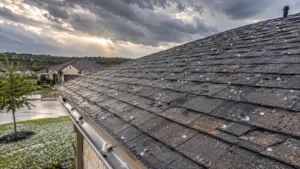
Texas weather can turn fast. One minute the sky is quiet, and the next, hail is hammering your roof hard enough to make you wonder what is happening above your ceiling. Hail damage to roofs in Copperas Cove can range from minor surface wear to serious problems that shorten the life of shingles, damage flashing, and eventually allow water into your home.
The tricky part? Roof damage is not always obvious.
A roof can look perfectly normal from your driveway while individual shingles have bruises, cracked surfaces, or missing protective granules. Those small problems may not cause a leak today. But give them enough heat, rain, and time, and they can become much more expensive.
That is why homeowners should know what to look for after a storm, when to schedule an inspection, and how to decide between repair and replacement.
Here is what matters.
How Hail Damage to Roofs in Copperas Cove Happens
Hail does not simply land on your roof.
It strikes it.
Wind-driven hail can hit shingles, vents, flashing, ridge caps, and gutters with considerable force. The result depends on several factors, including the size of the hailstones and the condition of your roof before the storm even began.
The most important factors include:
- Hailstone size
- Wind speed
- Wind direction
- Age of the roof
- Type of roofing material
- Roof pitch
- Existing shingle wear
- Location of trees and nearby structures
A newer roof may handle a storm differently than one that has spent 15 years baking under the Texas sun.
That matters because older asphalt shingles often become less flexible over time. When hail strikes a brittle shingle, the impact may knock off granules, crack the asphalt layer, or weaken the material beneath the visible surface.
This is also why hail damage to roofs in Copperas Cove can vary dramatically from one home to another, even on the same street.
Your neighbor may have little more than a few dented gutters.
Your roof could need significant repairs.
What Size Hail Can Damage a Roof?
There is no single hailstone size that automatically means your roof is damaged.
Still, size is useful when estimating the potential severity of a storm.
| Approximate Hail Size | Potential Roof Impact |
|---|---|
| Pea-sized | Usually minor, although older roofs may be more vulnerable |
| Dime to nickel-sized | Possible granule loss or light surface damage |
| Quarter-sized | Greater potential for shingle bruising and granule loss |
| Golf ball-sized | Significant impact damage becomes more likely |
| Larger than golf balls | Serious damage to shingles, metal components, siding, and exterior surfaces |
Quarter-size hail deserves attention.
Golf-ball-size hail deserves even more.
But do not assume that small hail means you are automatically in the clear. A combination of strong wind, repeated impacts, and already-aged roofing can create damage that is difficult to see from the ground.
The condition of the roof matters just as much as the storm.
Common Signs of Hail Damage on Asphalt Shingles
Asphalt shingles are common on homes throughout Central Texas, and they can show hail damage in several ways.
Some signs are obvious.
Others are surprisingly subtle.
Missing or Displaced Granules
The colored granules on asphalt shingles are not just decorative. They help protect the underlying material from sunlight and weather.
Hail can knock those granules loose.
After a storm, you may notice granules:
- Inside gutters
- Near downspouts
- Along driveways
- On patios
- Around the foundation
A small amount of granule loss is normal as a roof ages. A sudden increase after a hailstorm is worth investigating.
Dark or Bald Spots
When enough granules are knocked away, darker asphalt may become visible underneath.
These spots can look black, gray, or unusually smooth.
A few isolated marks may not automatically mean the roof needs replacement, but widespread areas of exposed asphalt can reduce the shingles’ ability to withstand future weather.
Bruised Shingles
Bruising is one of the reasons hail damage to roofs in Copperas Cove can be easy to miss.
A hail impact may weaken the internal structure of a shingle without creating an obvious hole.
A roofing professional may inspect impact areas closely and look for soft spots, fractures, or other evidence that the shingle has been compromised.
Cracked Shingles
Large hail, particularly when pushed by strong winds, may crack shingles.
Once a shingle is cracked, water has a potential path into the roofing system.
That does not guarantee an immediate leak.
It does increase the risk.
Damaged Shingle Edges
Edges and corners are particularly vulnerable because they have less surrounding material supporting them.
Hail and wind can loosen, bend, crack, or tear these sections.
Over time, damaged edges may become more vulnerable to lifting during future storms.
Hail Can Damage More Than Your Shingles
When most homeowners think about roof hail damage, they picture shingles.
That is only part of the story.
A complete roof system contains several components, and many of them can suffer impact damage.
A professional Copperas Cove roofing inspection may include:
- Roof vents
- Ridge caps
- Metal flashing
- Pipe boots
- Chimney flashing
- Skylights
- Gutters
- Downspouts
- Fascia
- Soffits
- Roof valleys
Metal components are especially useful after a hailstorm because dents can provide visible evidence of impact.
For example, dents in roof vents or gutters may indicate that hail struck the roof with enough force to justify a closer inspection of the shingles.
Signs You Can Spot Without Climbing Onto the Roof
Do not rush up a ladder after a storm.
Seriously.
Wet roofing materials can be slippery, loose shingles may shift under your feet, and storm damage can create hazards that are not visible from below.
Start on the ground instead.
Walk around your property and look for:
- Dented gutters
- Dented downspouts
- Damaged siding
- Torn window screens
- Shingle fragments
- Large amounts of granules
- Damaged outdoor HVAC equipment
- Broken branches
- Damaged vehicles
- Pieces of roofing material in the yard
These clues can tell you a lot.
If the hail was strong enough to dent your vehicle or metal gutter system, having the roof inspected is reasonable even if you cannot see obvious shingle damage.
Why Hail Damage May Not Cause a Leak Right Away
This surprises many homeowners.
A hail-damaged roof can remain dry for weeks or even months.
The absence of a ceiling stain does not necessarily mean the roof escaped unharmed.
When hail strikes asphalt shingles, it may weaken or fracture the material without immediately creating an open path for water. The roof continues dealing with heat, UV exposure, wind, and rain afterward.
Then the weakened area deteriorates.
Slowly.
A damaged shingle may begin losing more granules. A small crack can expand. Flashing may loosen. Moisture may eventually work beneath the surface.
By the time you notice a brown spot on the ceiling, the original hailstorm may feel like ancient history.
That is exactly why hail damage to roofs in Copperas Cove should be evaluated based on the condition of the roofing system, not simply on whether water is currently dripping into the house.
What to Do After a Hailstorm in Copperas Cove
A calm, methodical approach is best.
1. Inspect the Property From the Ground
Walk around the home when conditions are safe.
Look at gutters, siding, windows, outdoor equipment, and visible roof edges.
Do not climb onto the roof simply to see whether damage exists.
2. Take Photos
Document anything unusual.
Photograph:
- Hailstones if they are still present
- Dented gutters
- Damaged siding
- Fallen branches
- Vehicle dents
- Shingle pieces
- Interior stains
- Visible exterior damage
Photos create a useful record of what the property looked like immediately after the storm.
3. Check Ceilings and the Attic
Go inside.
Look for fresh discoloration, damp insulation, dripping water, or unusual moisture around roof penetrations.
Pay particular attention around:
- Chimneys
- Bathroom vents
- Skylights
- Attic vents
- Plumbing penetrations
4. Schedule a Professional Roof Inspection
If the storm produced significant hail or you see exterior damage, contact a qualified Copperas Cove roofer.
Subtle hail damage often requires closer inspection than homeowners can safely perform themselves.
5. Address Active Leaks Quickly
If water is already entering the home, temporary protective measures may be necessary.
Do not ignore active moisture.
Water can damage insulation, decking, drywall, paint, flooring, and personal belongings surprisingly quickly.
What Happens During a Copperas Cove Roof Inspection?
A quality inspection should involve more than someone glancing at the roof for five minutes.
The goal is to understand the roof as a complete system.
A roofer may examine:
- Shingle surfaces
- Individual impact marks
- Ridge shingles
- Valleys
- Roof penetrations
- Vent covers
- Flashing
- Gutters
- Downspouts
- Roof edges
- Attic conditions
- Signs of previous repairs
Different slopes may experience different levels of damage because hail rarely falls perfectly straight down.
Wind changes the equation.
One side of the roof may have taken repeated impacts while another suffered very little.
Good documentation matters too. Ask for photos so you can see exactly what the contractor is seeing.
You should understand what is wrong with your roof before agreeing to major work.
Repair or Replacement: Which Makes More Sense?
Not every hail-damaged roof needs to be replaced.
That is important.
Sometimes a repair is the smarter option.
Repair May Be Appropriate When:
- Damage is limited to a small area
- The roof is relatively new
- Matching shingles are available
- Flashing damage is isolated
- The underlying roof structure remains sound
Replacement May Make More Sense When:
- Hail damage is widespread
- Many shingles are bruised or fractured
- The roof is already aging
- Multiple slopes are affected
- Repairs would leave large portions of weakened material in place
- Matching existing materials is difficult
Here is a simple comparison:
| Roof Condition | Repair May Work | Replacement May Be Better |
|---|---|---|
| Small isolated damage | ✓ | |
| Widespread impact damage | ✓ | |
| Newer roofing system | ✓ | |
| Older, brittle shingles | ✓ | |
| Minor flashing damage | ✓ | |
| Extensive shingle bruising | ✓ |
The decision should be based on actual roof conditions.
Not fear.
Not pressure.
And certainly not a contractor automatically insisting that every hailstorm requires an entirely new roof.
How Hail Affects Different Roofing Materials
Hail damage to roofs in Copperas Cove does not look identical on every roofing material.
Asphalt Shingles
Common issues include:
- Granule loss
- Bruising
- Cracking
- Exposed asphalt
- Broken edges
Metal Roofing
Metal roofing can withstand severe weather well, but hail may cause:
- Dents
- Surface coating damage
- Damage around seams
- Damage around fasteners or penetrations
Some dents may be primarily cosmetic, while others can affect performance depending on where and how the metal was struck.
Tile Roofing
Clay and concrete tiles can crack or break under significant impact.
Even one broken tile can expose the roofing layers underneath.
Wood Shakes
Hail can split wood shakes or create fresh impact marks that follow the grain.
Identifying hail damage on wood roofing requires careful inspection because natural aging can sometimes resemble storm damage.
What About Homeowners Insurance?
Many homeowners insurance policies provide some level of coverage for hail damage, but the details vary substantially.
Never assume.
Read your policy.
Important items to review include:
- Wind and hail deductible
- Coverage limits
- Roof age provisions
- Exclusions
- Replacement Cost Value coverage
- Actual Cash Value coverage
- Claim reporting requirements
- Repair or replacement conditions
An older roof may be treated differently from a newer one depending on the policy.
If you are unsure how your coverage works, speak directly with your insurance company or a qualified insurance professional.
A roofing contractor can document physical roof conditions, but coverage decisions are ultimately governed by your policy and insurer.
Should You Call a Roofer Before Filing a Claim?
In many situations, having the roof inspected first can help you understand whether meaningful damage actually exists.
That information is valuable.
You may discover that the storm caused only minor damage that can be repaired relatively simply.
Or you may discover widespread impacts across several roof slopes.
A professional inspection can help establish:
- Where damage exists
- How extensive it appears
- Which roofing components are affected
- Whether repairs may be practical
- Whether replacement should be considered
No reputable roofer should guarantee that an insurance company will approve a claim.
The roof inspection and insurance decision are separate matters.
How Long Can You Wait to Repair Hail Damage?
Waiting is tempting when there is no leak.
I understand why.
Roof work is rarely something homeowners are excited to schedule.
But postponing necessary repairs can allow relatively manageable problems to spread.
Potential consequences include:
- Water intrusion
- Damaged roof decking
- Wet insulation
- Ceiling stains
- Drywall damage
- Mold growth
- Premature roof deterioration
- Higher future repair costs
The goal is not to panic after every storm.
It is to find out what happened.
A timely inspection of hail damage to roofs in Copperas Cove gives you information while the storm is still recent and before damaged materials have months to deteriorate.
Can You Reduce Future Hail Damage?
You cannot control the weather.
You can improve the roof’s ability to handle it.
If you are replacing your roof, ask about impact-resistant roofing materials. Some shingles are specifically manufactured and tested for greater impact resistance.
You can also reduce avoidable vulnerabilities by:
- Replacing damaged shingles promptly
- Maintaining flashing
- Keeping gutters clear
- Fixing loose roof components
- Trimming nearby tree limbs
- Inspecting the roof periodically
- Addressing small leaks early
Maintenance matters.
A roof that enters storm season in good condition is generally better positioned than one already dealing with loose shingles, exposed fasteners, or failing flashing.
Choosing a Copperas Cove Roofer After a Hailstorm
Storms often bring an influx of roofing contractors into affected areas.
Some are excellent.
Others disappear once the work dries up.
Take your time when choosing someone to work on your home.
Look for a Copperas Cove roofer who provides:
- A clear roof inspection
- Photographic documentation
- A written estimate
- Proof of appropriate insurance
- Specific material recommendations
- A defined scope of work
- Written warranty information
- Clear cleanup procedures
Watch for high-pressure sales tactics.
You should never feel pushed into signing a roofing contract before you understand the damage, scope, materials, cost, and warranty.
Good Copperas Cove roofing work begins with clear information.
Questions to Ask Before Hiring a Roofing Contractor
A few direct questions can reveal a lot about the company you are considering.
Ask:
- What specific hail damage did you find?
- Can you show me photos of the affected areas?
- Do you recommend repair or replacement, and why?
- Which roofing materials will you use?
- What does the estimate include?
- Will old materials be removed?
- How will landscaping be protected?
- Who is responsible for cleanup?
- What workmanship warranty is provided?
- What happens if additional damage is discovered during the project?
Listen carefully to the answers.
A contractor should be able to explain recommendations in plain language.
Frequently Asked Questions About Hail Damage to Roofs in Copperas Cove
Can quarter-size hail damage a roof?
Yes. Quarter-size hail can cause granule loss, bruising, and other damage, particularly when driven by strong winds or when roofing materials are already aged.
Can hail damage a roof without causing leaks?
Absolutely. A roof may sustain impact damage without immediately allowing water inside. Leaks can develop later as weakened materials deteriorate.
What does hail damage look like on shingles?
Common signs include dark impact spots, granule loss, exposed asphalt, bruising, cracks, and damaged edges.
Should I replace my roof after every hailstorm?
No. Replacement should be based on the extent of the damage and the overall condition of the roof.
Can small hail damage an older roof?
Yes. Older shingles may be more brittle and vulnerable to impact than newer materials.
How soon should I inspect my roof after hail?
It is smart to inspect the property once conditions are safe. If the storm produced significant hail, arrange a professional inspection promptly.
Can I inspect hail damage myself?
You can inspect your property from the ground, but climbing onto a roof carries significant safety risks. A trained professional can perform a closer evaluation.
Does hail damage always require roof replacement?
No. Isolated damage may sometimes be repaired without replacing the entire roof.
What happens if hail damage is left unrepaired?
Damaged roofing materials can deteriorate further, potentially leading to leaks, decking damage, wet insulation, and interior repairs.
How do I choose a reliable Copperas Cove roofing contractor?
Look for clear documentation, detailed estimates, appropriate insurance, written warranties, quality materials, and straightforward explanations without aggressive sales pressure.
Do Not Ignore Possible Hail Damage
A major hailstorm does not automatically mean your roof needs replacement.
But assuming everything is fine because you cannot see damage from your driveway can be equally risky.
Hail damage to roofs in Copperas Cove often starts with relatively small impact points: missing granules, bruised shingles, dented flashing, cracked edges, or weakened roofing materials. Catching those problems early gives you more options.
Inspect what you can safely see.
Document anything unusual.
Then have the roof professionally evaluated if the storm was severe or you notice signs of impact.
If you are concerned about hail damage to roofs in Copperas Cove, Copperas Cove Roofs can inspect your roofing system, explain what we find, and help you determine whether repair or replacement makes the most sense for your home. Call +1 (512) 297-7580 or email info@copperascoveroofs.com to discuss your roof after a storm.